How to Generate Consulting Leads: Website Strategy Guide
Turn your consulting website into a lead engine with SEO, LinkedIn outreach, content marketing, and referral systems that bring qualified clients to you.
Your website is your best salesperson. A well-built consulting lead generation website strategy combines SEO, targeted content, and smart conversion design to bring qualified clients to you around the clock. Most consultants rely on referrals and hope. The ones who grow consistently treat their website as a lead generation engine, not a digital business card. This article breaks down exactly how to build that engine, from your homepage structure to LinkedIn outreach to referral systems, with real tactics you can act on today.
What are the essential website elements to attract consulting clients?
Your website either earns trust in the first few seconds or loses the visitor forever. The homepage must speak directly to your ideal client's problem, not your credentials. Lead with the outcome you deliver, not your job title.

Consulting buyers do extensive self-education before they ever contact a firm. That means your site needs to do the selling before you pick up the phone. Case studies, client testimonials, and short video introductions all reduce the friction that keeps prospects from reaching out.
Here are the website elements that consistently convert visitors into leads:
- Clear ideal client statement on the homepage above the fold. Tell visitors in one sentence who you help and what changes for them.
- Lead magnets tied to a specific client problem. A free ROI calculator, a benchmarking guide, or a short diagnostic quiz all work well.
- Dedicated landing pages with a single call-to-action. A focused landing page with no navigation menu outperforms a general homepage for lead conversion every time.
- SEO-optimized blog content that answers the questions your ideal clients type into Google. Think "how to reduce operational costs in manufacturing" rather than "consulting services."
- Smart contact forms that ask one or two qualifying questions. This filters tire-kickers and gives you context before the first call.
- Internal links between related blog posts and service pages. This builds topical authority and keeps visitors on your site longer.
Pro Tip: Strip all navigation links from your landing pages. Every extra link is an exit ramp. Keep the visitor focused on one action.
The website features that convert are rarely flashy. They are clear, fast, and focused on the visitor's problem. A cluttered site with five different CTAs converts far worse than a simple page with one strong offer.
How can consultants use LinkedIn to generate leads effectively?
LinkedIn generates 80% of B2B social media leads, making it the single most important platform for consultants targeting business buyers. That number is not a coincidence. LinkedIn is where decision-makers go to learn, hire, and solve problems.
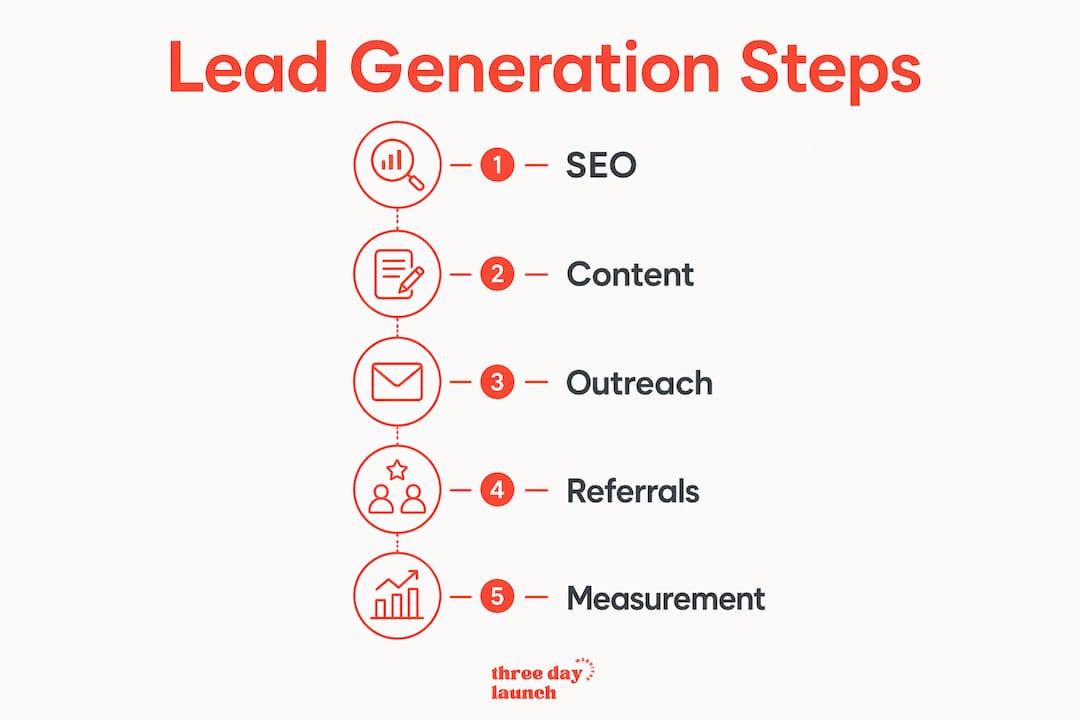
The mistake most consultants make is treating LinkedIn like a job board. Post content that solves real problems, not content that announces your services. Consistency matters more than perfection. Posting three to five times per week builds the visibility that makes your outreach land.
Here is a process that works:
- Identify your target accounts. Use LinkedIn Sales Navigator or a B2B database to build a list of companies that match your ideal client profile.
- Research event triggers. Look for role changes, funding announcements, acquisitions, or new product launches. Event-triggered outreach dramatically outperforms static demographic targeting.
- Connect with a personalized note. Reference the specific trigger. "I saw your team just expanded into the Southeast market" beats "I'd love to connect" every single time.
- Post value-first content. Share a short insight, a client result (anonymized), or a counterintuitive take on a problem your clients face. This warms your audience before you ever send a message.
- Follow up with a soft CTA. After a few interactions, send a direct message offering something useful, a free resource, a quick audit, or a 20-minute call. No hard pitch.
Pro Tip: Before reaching out, check if the prospect recently changed roles, raised funding, or made a public announcement. Timely relevance turns a cold message into a warm conversation.
Consultants who send 30–80 deeply personalized touches per week consistently outperform those who blast thousands of generic messages. Quality beats volume. Your personal brand is on the line with every message you send.
What role does content marketing and SEO play in consulting lead generation?
Content marketing is the long game, and it pays off. Thought leadership content drives 40–60% of inbound opportunities for established consulting firms. That is a significant share of your pipeline coming from articles, guides, and webinars you created once.
SEO does not produce overnight results. Organic content and SEO take 6–12 months to yield consistent lead generation results. That timeline feels long until you realize the leads keep coming without ongoing ad spend. Paid advertising for consulting services can cost $400–$600 per qualified conversation. A well-ranked blog post costs nothing after it is written.
Build your content strategy around these pillars:
- Answer real client questions. Use Google Search Console and AnswerThePublic to find the exact phrases your prospects search. Write one thorough article per question.
- Build content clusters. Create a pillar page on your core expertise, then write supporting articles that link back to it. This signals topical authority to search engines.
- Create downloadable resources. ROI calculators, industry benchmarks, and checklists make excellent lead magnets. Gate them behind a simple email form.
- Repurpose content. Turn a strong blog post into a LinkedIn carousel, a short video, or a webinar. One idea, multiple formats, multiple touchpoints.
- Publish on a consistent schedule. Two solid articles per month beats eight rushed ones. Consistency signals reliability to both search engines and readers.
Here is how content types map to the buyer journey:
| Buyer stage | Content type | Goal |
|---|---|---|
| Awareness | Blog posts, LinkedIn articles | Build visibility and trust |
| Consideration | Case studies, webinars, guides | Demonstrate expertise |
| Decision | Testimonials, diagnostics, free audits | Reduce risk and prompt contact |
The SEO fundamentals for your website are not complicated. Target specific questions, write clearly, and earn links by being genuinely useful. That formula works for consultants in every specialty.
How do referral systems and strategic partnerships complement your digital efforts?
Referrals convert at the highest rate and carry the lowest acquisition cost of any channel. Every consultant knows this. The problem is that most leave referrals entirely to chance. A client might mention you to a colleague, or they might not. That is not a system.
Building a referral process changes everything. Start by identifying your top five to ten past clients who got strong results. These are your champions. Reach out personally, share a specific result you achieved together, and ask directly if they know anyone facing a similar challenge. Specificity makes the ask easy to act on.
Partnerships work the same way. Find professionals who serve your ideal client but do not compete with you. An HR consultant might partner with an executive coach. A financial consultant might co-create content with a legal advisor. These relationships generate warm introductions that convert far better than cold outreach.
A few practices that keep referral channels active:
- Stay in regular contact with past clients. A quarterly check-in email or a shared article keeps you top of mind without being pushy.
- Offer something in return. A referral fee, a co-authored piece, or a reciprocal introduction all make the relationship feel mutual.
- Use your alumni network. Former colleagues and classmates already trust you. They are an underused source of introductions.
- Combine referrals with LinkedIn visibility. When a past client sees you posting consistently, they are more likely to think of you when a colleague mentions a problem you solve.
Pro Tip: Do not wait until you need leads to nurture referral relationships. Keep the connection warm so the ask feels natural, not desperate.
Diversifying beyond referrals alone builds a more durable pipeline. Referrals are great, but they are unpredictable. Pair them with inbound content and outreach for a system that does not stall when your network goes quiet.
Let's Launch Your Strategic Coaching Website
Your first step is to book a free call so we can get your questions answered.
Book A Free CallWhat metrics and tools help you improve your lead generation results?
You cannot fix what you do not measure. The key performance indicators for a consulting lead generation system are website traffic, lead magnet downloads, inquiry rates, and conversion rates from inquiry to paid engagement. Track all four monthly.
Use Google Analytics to monitor which pages drive the most traffic and where visitors drop off. If your contact page gets traffic but few form submissions, the form itself is the problem. Shorten it, rewrite the headline, or test a different offer. A/B testing landing pages and CTAs takes less time than most consultants think and produces clear answers.
Avoid mass cold email blasts. They damage your sender reputation and rarely produce qualified leads. Personalized, insight-led outreach protects your brand and produces better results than volume-based approaches.
Here is a simple framework for channel balance:
| Channel | Type | Primary metric |
|---|---|---|
| SEO and blog content | Inbound | Organic traffic, lead magnet downloads |
| LinkedIn outreach | Outbound | Connection acceptance rate, reply rate |
| Referral program | Relationship | Introductions per quarter |
| Landing pages | Conversion | Form submission rate |
Keep your prospect lists clean. Outdated contacts waste your time and hurt deliverability. Audit your list every quarter and remove contacts who have not engaged in six months.
Pro Tip: Set a monthly review date. Look at which channel produced the most qualified inquiries, double down on it, and cut what is not working. Simple, consistent iteration beats complex systems.
The website design choices you make directly affect your inquiry rate. A slow, cluttered site loses leads before they ever read your offer. Speed, clarity, and a single strong CTA are the three things that move the needle most.
Key Takeaways
A consulting lead generation system works when your website, content, outreach, and referral process all point toward the same ideal client.
| Point | Details |
|---|---|
| Website as lead engine | Build dedicated landing pages with one CTA and qualifying contact forms. |
| LinkedIn outreach | Post consistently and personalize every message using event-based triggers. |
| Content and SEO | Publish answers to real client questions; expect 6–12 months for consistent organic results. |
| Referral systems | Build a deliberate referral process with past clients and strategic partners. |
| Measure and iterate | Track traffic, inquiry rates, and conversion monthly; cut what does not perform. |
What I've learned building lead systems for consultants
Most consultants I work with have the same blind spot. They build a beautiful website, post a few times on LinkedIn, and then wait. When leads do not appear in 30 days, they conclude that digital marketing does not work for their practice.
The real issue is sequencing. Your website needs to be optimized for a specific client before you drive traffic to it. Your LinkedIn content needs to build trust before your outreach lands. Your referral asks need to be specific before past clients can act on them. None of these steps work in isolation.
The consultants who generate consistent leads treat their pipeline like a product. They test, measure, and adjust. They do not mass-blast cold emails. They research triggers, write content that solves real problems, and ask for referrals with specificity. That combination, website plus outreach plus authority content plus referrals, is what produces a pipeline that does not depend on any single channel.
The uncomfortable truth is that most consultants underinvest in their website. They spend thousands on conferences and almost nothing on the one asset that works for them 24 hours a day. A well-built site with clear messaging, a strong lead magnet, and fast load times will outperform a year of networking events. Start there.
How Three Day Launch helps consultants launch lead-ready websites fast
If your website is not generating inquiries, the design and structure are likely the problem. Three Day Launch builds custom consulting websites in three days, fully optimized for lead generation from day one.
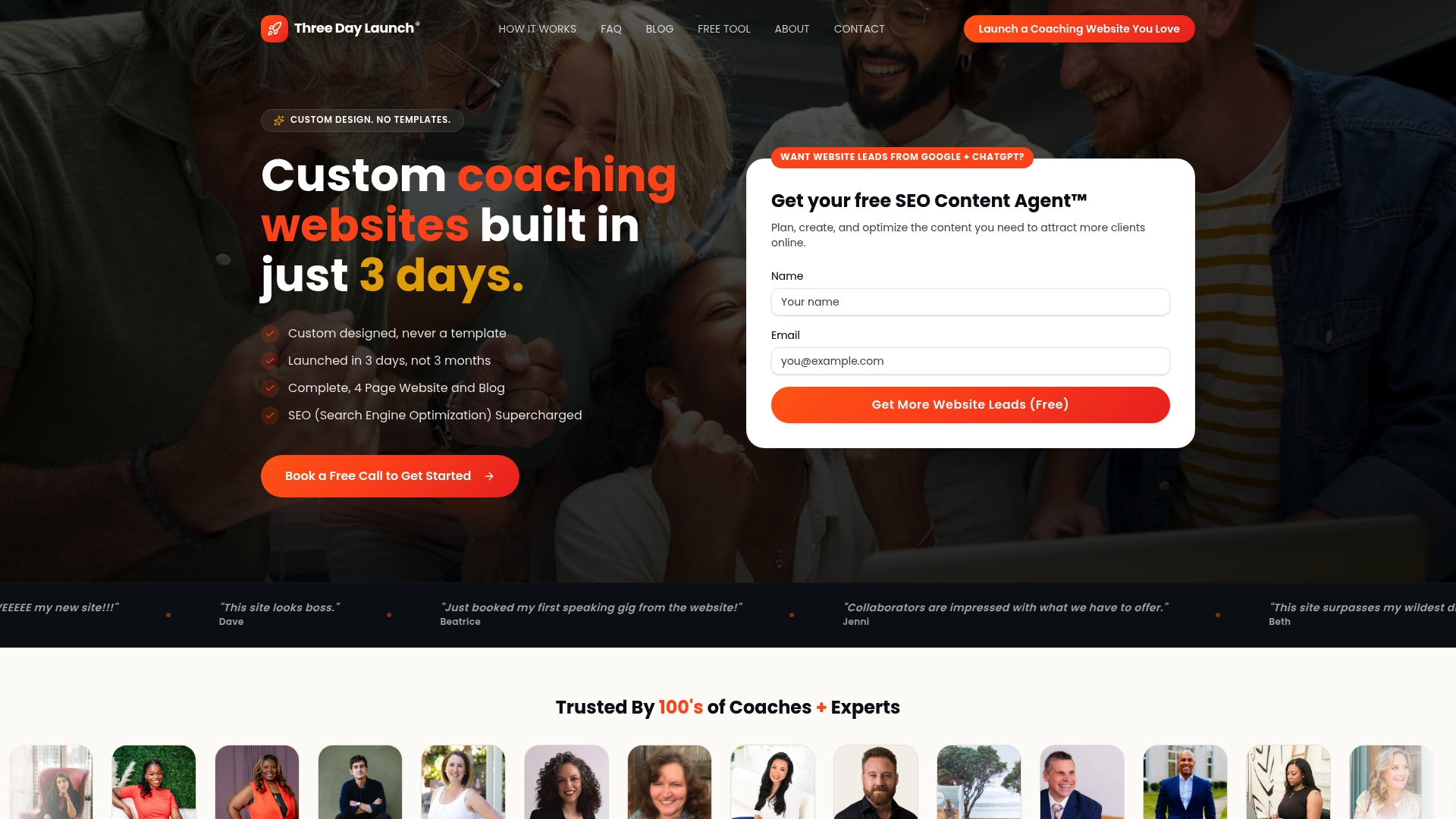
Every site includes conversion-focused design, SEO-ready page structure, lead magnet landing pages, and smart contact forms built to qualify visitors before they reach you. No templates, no months-long timelines, no guesswork on what converts. Consultants who have launched with Three Day Launch report meaningful increases in organic traffic and client inquiries within weeks of going live. If you are ready to turn your website into a client growth engine, Three Day Launch is built for exactly that.
FAQ
What is a consulting lead generation website strategy?
A consulting lead generation website strategy is a system that combines SEO, targeted content, lead magnets, and conversion-focused design to attract and capture qualified client inquiries through your website.
How long does SEO take to generate consulting leads?
Organic SEO takes 6–12 months to produce consistent lead generation results for consulting services. The payoff is durable traffic that does not require ongoing ad spend.
Why does LinkedIn work better than other social platforms for consultants?
LinkedIn generates 80% of B2B social media leads, making it the most effective platform for reaching business decision-makers. Its professional context means your content reaches buyers who are actively looking for solutions.
How do I build a referral system for my consulting practice?
Identify your top past clients, reach out with a specific result you achieved together, and ask directly if they know anyone facing a similar challenge. Regular contact and reciprocal value keep the channel active.
What metrics should I track to improve my lead generation results?
Track website traffic, lead magnet downloads, inquiry rates, and conversion rates from inquiry to paid engagement. Review these monthly and adjust based on which channels produce the most qualified leads.