How to Build Credibility for a New Business Website
Build website credibility fast with trust signals, fast load times, authority content, and consistent reviews that turn new visitors into paying clients.
How to Build Credibility for a New Business Website
Building credibility with a new business website means communicating your value clearly, proving your legitimacy, and earning visitor trust before they ever contact you. Your website is your storefront and your handshake, often the first real impression a potential client gets of your business. 81% of customers will not purchase from a brand they don't trust. That number alone should make website credibility your top priority from day one. The good news? You don't need months or a massive budget to get it right.
What are the essential trust signals every new business website must show?
Website credibility is the professional term for the combination of signals that tell a visitor, "This business is real, reliable, and worth my time." For new businesses especially, these signals do heavy lifting because you don't yet have years of reputation behind you.
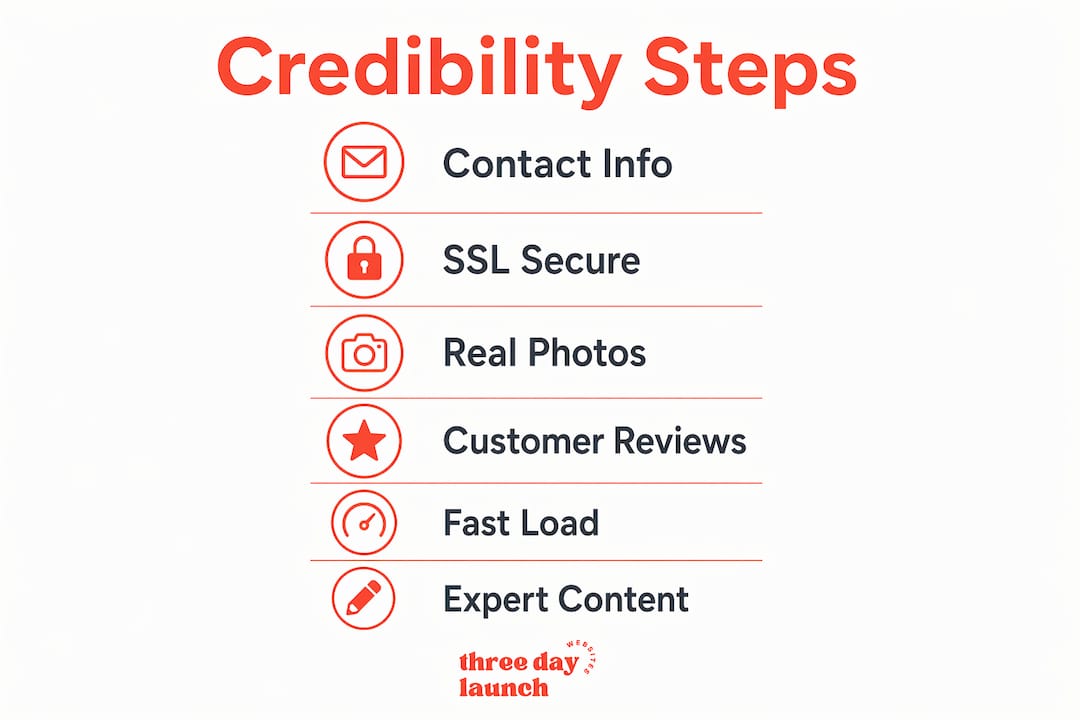
The most impactful trust signals are visible, specific, and easy to verify. Here's what your site needs:
- Visible contact details on every page. A phone number, email address, and physical location (even a city and state) reduce visitor anxiety immediately. Contact info on every page signals that a real person runs this business and is reachable.
- Real photos of your team and clients. Stock images are easy to spot and easy to distrust. Authentic visual content reduces skepticism far more effectively than polished but generic photography.
- Customer testimonials with specific outcomes. "Sarah helped me land three new clients in 30 days" beats "Great service!" every time. Specificity is what makes a testimonial believable.
- An HTTPS secure connection and clear policies. A padlock icon in the browser bar is table stakes. Pair it with a visible privacy policy and refund or cancellation terms linked in your footer.
- A clear, specific headline. Your homepage headline should tell visitors exactly what you do and who you serve within five seconds of landing. Vague headlines like "Helping you reach your potential" lose people fast.
- Social proof elements. Client logos, certifications, awards, and media mentions all signal that others have already vetted you. Even one recognizable logo builds confidence.
Pro Tip: Ask your first three clients for a testimonial that includes a specific result. "I booked four discovery calls in my first week after launch" is worth more than a five-star rating with no context.
97% of consumers read local business reviews before contacting a business. That means your reviews are often the deciding factor, not your sales copy. Getting those early reviews on Google and displaying them prominently on your site is one of the fastest ways to establish authority for a new website.

Good website copywriting ties all these signals together. The words on your site should reinforce your credibility at every turn, not just describe your services.
How does site speed affect your website's credibility?
Technical performance is a credibility signal most new business owners overlook. Visitors don't separate "slow site" from "unprofessional business." They just leave.
Visitors judge credibility in under 3 seconds, and 40% abandon a page that takes more than 3 seconds to load. That means a slow site is actively destroying trust before a single word is read. Here's how to fix it:
- Target a load time under 2 seconds. Use Google PageSpeed Insights to get a free baseline score. Anything below 70 on mobile needs attention.
- Compress your images. Large image files are the most common cause of slow load times. Tools like Squoosh or TinyPNG reduce file size without visible quality loss.
- Remove unnecessary scripts and plugins. Every extra plugin adds load time. Audit your site quarterly and cut anything you don't actively use.
- Fix broken links immediately. A 404 error page signals neglect. Run a free broken link checker monthly and repair or redirect any dead URLs.
- Check Core Web Vitals. Google's Core Web Vitals measure real user experience across loading speed, interactivity, and visual stability. Passing all three is a strong credibility signal to both visitors and search engines.
- Make your site fully mobile-friendly. Over half of all web traffic comes from mobile devices. A site that looks broken on a phone tells visitors you haven't thought about their experience.
Pro Tip: The speed benefits of a fast site go beyond SEO. Faster sites convert better because they feel more trustworthy. Treat speed as a credibility investment, not just a technical checkbox.
A slow or broken website signals that the business behind it doesn't pay attention to details. That's the last impression you want to leave.
How do you build authority and expertise through website content?
Content is where you prove you know your stuff. Trust signals tell visitors you're legitimate. Content tells them you're the right choice.
The most effective content strategy for a new business website is the hub-and-spoke model. You create one central "hub" page that covers your core topic in depth, then build "spoke" pages that go deeper on specific subtopics. This approach builds topical authority by showing search engines and AI systems that your site covers a subject thoroughly, not just superficially.
A clearly defined Point of View (POV) is the foundation of this strategy. Your POV is your specific perspective on your industry. It differentiates you from every other coach or consultant in your space. A consistent, defined POV also builds AI system confidence in your authority, which matters more in 2026 as AI-driven search becomes the norm.
Here's what strong authority content looks like in practice:
- Author bios with real credentials. Include your name, photo, certifications, and a sentence about your firsthand experience. This is called "entity clarity" and it matters for both human visitors and AI search systems.
- Schema markup and structured data. Adding Organization Schema and FAQ Schema to your pages helps AI systems understand who you are and what you do. Sites with strong schema coverage see significantly more citations in AI-generated answers.
- Detailed service pages. Each service you offer deserves its own page with a clear description, who it's for, what results to expect, and a FAQ section addressing common objections.
- FAQs throughout your site. FAQs answer the questions visitors are already asking. They also improve your chances of appearing in featured snippets and AI-generated responses.
Understanding how web design affects credibility is just as important as the content itself. A well-structured, visually clear site makes your expertise easier to absorb and trust.
A single trusted editorial backlink from a relevant, high-authority site outweighs dozens of low-quality links. Focus on earning mentions from industry publications, podcast appearances, and guest posts rather than chasing link volume.
How do you maintain and grow website credibility over time?
Let's Launch Your Strategic Coaching Website
Your first step is to book a free call so we can get your questions answered.
Book A Free CallCredibility isn't a one-time project. It's a system you maintain and build on consistently. Here's how to keep it strong as your business grows:
- Request reviews after every positive client experience. Ask specifically for Google reviews, since 97% of consumers read them before contacting a business. A simple follow-up message with a direct review link makes it easy for clients to say yes.
- Keep your NAP consistent across all platforms. NAP stands for Name, Address, and Phone number. Minor discrepancies between your website, Google Business Profile, and directory listings fragment your authority and split your reviews. NAP consistency is a low-cost, high-impact credibility activity.
- Update your content regularly. Outdated blog posts, old pricing, or expired offers signal that your business isn't active. Review your key pages every quarter and refresh anything that no longer reflects your current work.
- Monitor site performance and fix issues fast. Set up Google Search Console to catch crawl errors, broken pages, and performance drops. Visitors who hit a broken page rarely come back.
- Add proactive communication features. Live chat and accessible FAQs demonstrate transparency and reduce the risk perception visitors feel before they commit to contacting you. Proactive communication builds trust faster than reactive marketing.
- Build third-party proof over time. Pursue podcast interviews, guest articles, and partnership mentions. Each external reference reinforces your authority and sends new audiences to your site with a built-in endorsement.
Credibility compounds. Every review, every updated page, and every new backlink adds to a foundation that gets stronger with time.
Key Takeaways
Building credibility for a new business website requires consistent trust signals, technical reliability, and authoritative content working together from launch day forward.
| Point | Details |
|---|---|
| Trust signals are non-negotiable | Display contact details, real photos, testimonials, and HTTPS on every page from day one. |
| Speed equals credibility | Sites loading under 2 seconds retain visitors; slow sites signal neglect and drive people away. |
| Content builds authority | Use a hub-and-spoke model with schema markup and clear author bios to demonstrate expertise. |
| NAP consistency protects trust | Keep your name, address, and phone number identical across all platforms to avoid fragmenting authority. |
| Credibility requires maintenance | Request reviews, update content quarterly, and monitor performance to keep trust signals strong. |
What I've learned about credibility that most guides won't tell you
Here's the honest truth: most new business owners treat credibility like a checklist. Add a testimonial, get an SSL certificate, done. But credibility is a system, and a system only works when all the parts are running at the same time.
The clients I see struggle most are the ones who fix one thing and ignore the rest. They get a beautiful website but forget to ask for reviews. Or they collect great testimonials but let their site load in five seconds on mobile. Every weak link in that chain costs you a client you'll never know you lost.
The fastest wins I've seen come from the simplest fixes. Updating contact information, adding a real headshot, or cutting a slow-loading plugin can change how a visitor feels about a business in seconds. You don't always need a full redesign. You need to close the gaps.
What I believe most strongly is this: transparency builds trust before a visitor becomes a customer. Answer their questions before they ask. Show them who you are before they have to dig for it. The businesses that do this consistently are the ones that earn trust fast, even when they're brand new.
A faster path to a credible, professional website
Getting your website right from the start saves you months of lost leads and reputation repair.
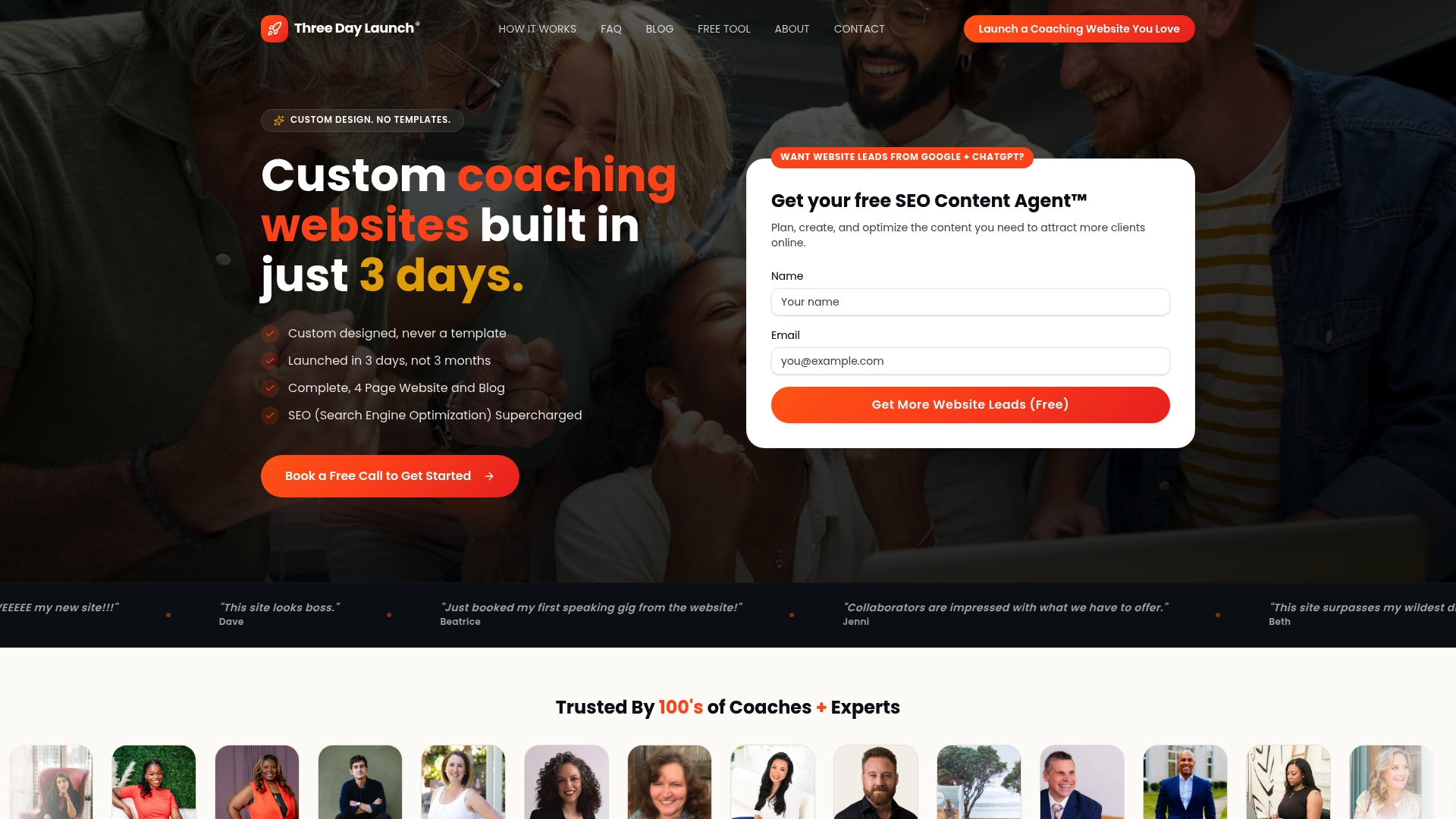
Three Day Launch builds fully custom, multi-page websites for coaches and entrepreneurs in just three days. Every site is designed with credibility in mind: clear messaging, professional visuals, fast load times, and the trust signals that convert visitors into clients. Coaches in life, finance, and health have seen real results, including significant increases in organic traffic and client inquiries shortly after launch. If you're ready to put a credible, professional site in front of your audience fast, explore custom website design built specifically for entrepreneurs who can't afford to wait.
FAQ
How long does it take to build credibility with a new website?
You can establish basic credibility signals within the first week by adding contact details, HTTPS, and real testimonials. Deeper authority through content and reviews builds over 3–6 months of consistent effort.
What is the most important trust signal on a new business website?
Visible contact information and genuine customer testimonials are the highest-impact trust signals. 97% of consumers read reviews before contacting a business, making social proof the credibility factor that most directly drives decisions.
Does site speed really affect how trustworthy a website feels?
Yes. 40% of visitors leave a page that takes more than 3 seconds to load. A slow site signals neglect, regardless of how good your content is.
What is schema markup and why does it matter for credibility?
Schema markup is structured code added to your website that helps search engines and AI systems understand your business, services, and content. Sites with strong schema coverage earn significantly more citations in AI-generated search results, which increases your visibility and authority.
How do I increase trust online if my business is brand new with no reviews?
Start by displaying your credentials, a real photo, and specific details about your process and results. Then actively request reviews from your first clients and link to any third-party mentions or certifications you already have.